
Kiko Kono, M.D.
Profile
Graduated from Kawasaki Medical School. Worked as a dermatologist for about 20 years at core hospitals. After many years of experience and achievements, he became a cosmetic dermatologist. His practice style is to examine the skin thoroughly and pursue what is happening where on the skin and approach the problem. Her specialties include customized treatment, laser treatment, Botox, and skin growth injections. In her private life, she is a mother of two children.
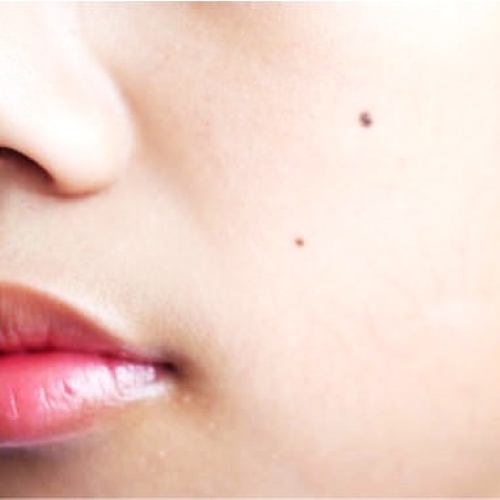
This article is intended for those who are considering mole removal at a dermatology clinic in Hiroshima City. Many people want to remove moles located on the face or other parts of the body that are easily visible. However, they may actually be other conditions that resemble moles. In this article, we will explain the basics of moles as well as the symptoms that can easily be mistaken for moles. Please refer to this article if you are interested in removing a mole that is bothering you.
Mole removal at a dermatologist in Hiroshima City, Japan! Review the causes and main symptoms
Moles, called "nevocytic nevi" or "pigmented nevi" in medical terminology, can occur on any part of the body, including the face, back, arms, fingers, and feet. They can be flat to rounded and raised, etc.There are many different types of moles, and some of them may be different diseases that can easily be mistaken for moles. Therefore, if you are considering removal at a dermatologist in Hiroshima City, you should first acquire basic knowledge about the causes and symptoms of moles.
■ What causes moles to form?
Moles are altered melanocytes that produce melanin pigment.It is formed by an increase in "nevus cells."A type of benign skin tumorThey are. Some moles are present at birth, but as we age, new moles may arise or become darker in color due to the effects of ultraviolet radiation. Pregnant women may also have moles that become darker due to hormonal effects.
■Common Symptoms of Moles 1|Simple Blackheads
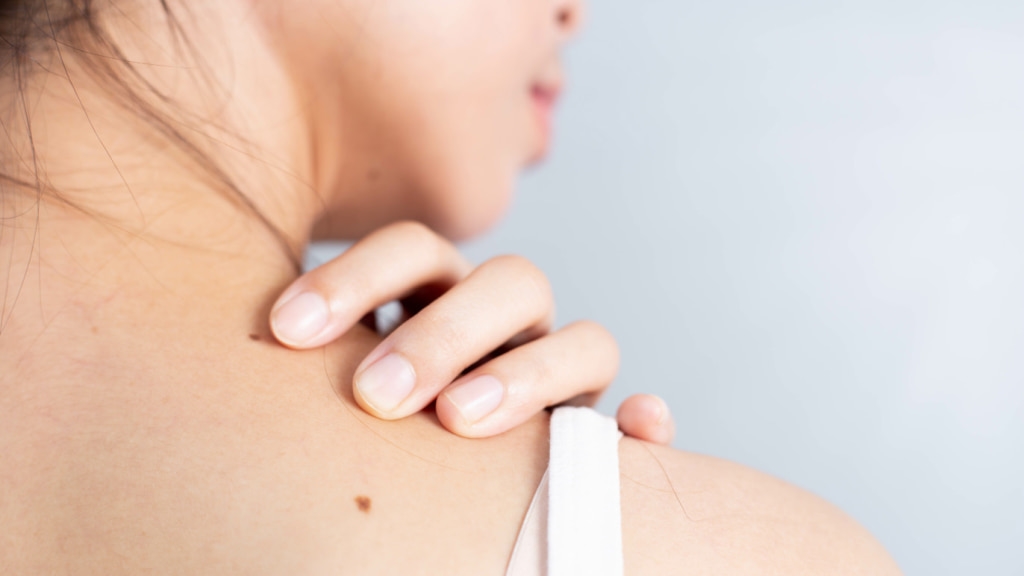
A simple lentiginous mole is a dark brown or blackish-black color, about 1 to 2 mm in diameter, commonly referred to as a "mole". They occur when melanocytes in the basal layer of the skin's epidermis produce excessive amounts of melanin pigment.Some are congenital and some are acquired, which increase with age.The acquired form appears in the first few years of life and is characterized by an increase or elevation after puberty.
Typical Symptoms of Moles 2|Nevus cell nevus (pigmented nevus)
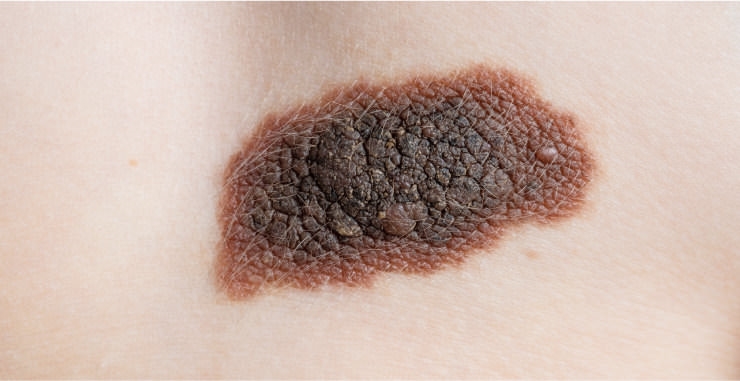
Nevocytic nevi (pigmented nevi) are clusters of nevus cells that have degenerated melanocytes, which are the cause of lentigo simplex. They vary in shape from flat to raised moles and are black to brown in color. In some cases, they may be larger in size than simple melanocytes. However, even though they may look like moles,The possibility of malignancy exists, so care must be taken.。
Caution before mole removal at a dermatologist in Hiroshima City! Diseases that are easy to mistake
In general, mole removal treatment is intended to improve the appearance of moles and is free of charge. However, in some cases, if it is not a mole but a malignant tumor, it may need to be treated as soon as possible. Not mole removalIf the treatment is for a malignant tumor, it will be covered by insurance.Therefore, if you are concerned about a mole, you should see a dermatologist in Hiroshima. The following is a detailed explanation of diseases that can easily be mistaken for moles.
■Malignant melanoma
A condition similar to moles that should be noted is malignant melanoma, "cancer of the mole". Also called melanoma, it is caused by malignant transformation of melanocytes. Among other things,High risk among malignant tumors of the skin, metastasizing to internal organs in advanced stagesIn some cases, the disease can lead to death, so care must be taken.
In Japanese people, malignant melanoma is more likely to develop on the soles of the feet, palms of the hands, fingernails and toenails. A sudden appearance of a mole in these areas or a large mole may be malignant melanoma. Also, if you find a mole of concern, such as one that is asymmetrical in shape or has an indistinct border with its surroundings, contact a specialized medical facility.
Dermatologists can determine the tumor using a loupe called a "dermoscopy." To determine whether the tumor is malignant or not, the tumor is removed and sent for pathological examination. If the tumor is determined to be malignant, an enlarged resection is performed as soon as possible.
■ Basal cell epithelioma
Basal cell epithelioma is,A type of skin cancer also known as "basal cell carcinoma."It is a cancer. Unlike malignant melanoma, cancer is not likely to metastasize to internal organs. However, if left untreated, it will grow and spread to other organs,If it progresses too deeply, it could collapse the bone.Therefore, it must be completely removed by surgery. In general, complete cure is possible if the tumor is removed by surgical methods appropriate to its size and location.
In the case of basal cell epithelioma, as with malignant melanoma, tumor tissue must be taken and examined. It is estimated that 80% of basal cell epitheliomas appear on the face, and in some cases, depending on the location of the tumor, plastic surgery may be required to reconstruct the defect after resection.
■ Seborrheic keratosis
Seborrheic keratosis is one of the benign tumors that increase with age. Symptoms vary, ranging from a thin appearance like a spot to a raised appearance like a mole, but in any case, it is characterized by its tendency to occur on the face and neck where it is exposed to sunlight. Accumulation of ultraviolet rays is thought to be the cause,Risk of developing the disease increases more at age 60 and older.Moles are the most common type of skin lesions. Unlike moles, which originate from the epidermis, treatment methods that approach the surface of the skin are chosen.
■ Soft Fibroma
Soft fibromas appear on soft skin areas such as the neck and armpits due to external causes such as ultraviolet rays and friction, or internal factors such as aging and body constitution. They are 1 to 5 mm in size and can be light brown in color, making them easily mistaken for moles, but strictly speaking, they are notBenign tumors classified as wartsare. They are easier to remove than moles and are commonly treated with the CO2 (carbon dioxide) laser or electrocautery.
■ Neurofibroma
Neurofibroma is a benign skin tumor that appears extending from a peripheral nerve. Soft, thick nerve tissue increases under the skin and rises in the form of a lump 5 mm to 1 cm in diameter. They are classified as either solitary or multiple, with multiple cases being classified as "Recklinghausen's disease (neurofibromatosis)A hereditary condition called "neurofibroma" is suspected. Neurofibromas of the skin do not need to be treated if they do not bother you, but if you have symptoms in the bones or nervous system, consult a specialist.
Mole removal performed by Yayoi Clinic, a cosmetic dermatology clinic in Hiroshima City
Here are some details about the mole removal treatment performed by the Yayoi Clinic, a cosmetic dermatology clinic in Hiroshima City.
■Diagnose the type of mole and suggest appropriate treatment methods
At Yayoi Clinic, a cosmetic dermatology clinic in Hiroshima, experienced doctors who have performed numerous mole removal treatments are in charge of treatment. Because we are a cosmetic dermatology clinic, we take into account the concerns and symptoms of each individual patient, diagnose them, and propose appropriate treatment methods to achieve beautiful results. If you are interested in mole removal at a dermatology clinic in Hiroshima, or if you have any questions or concerns about fees or treatment methods, please feel free to contact us.
■Mole removal by CO2 (carbon dioxide) laser
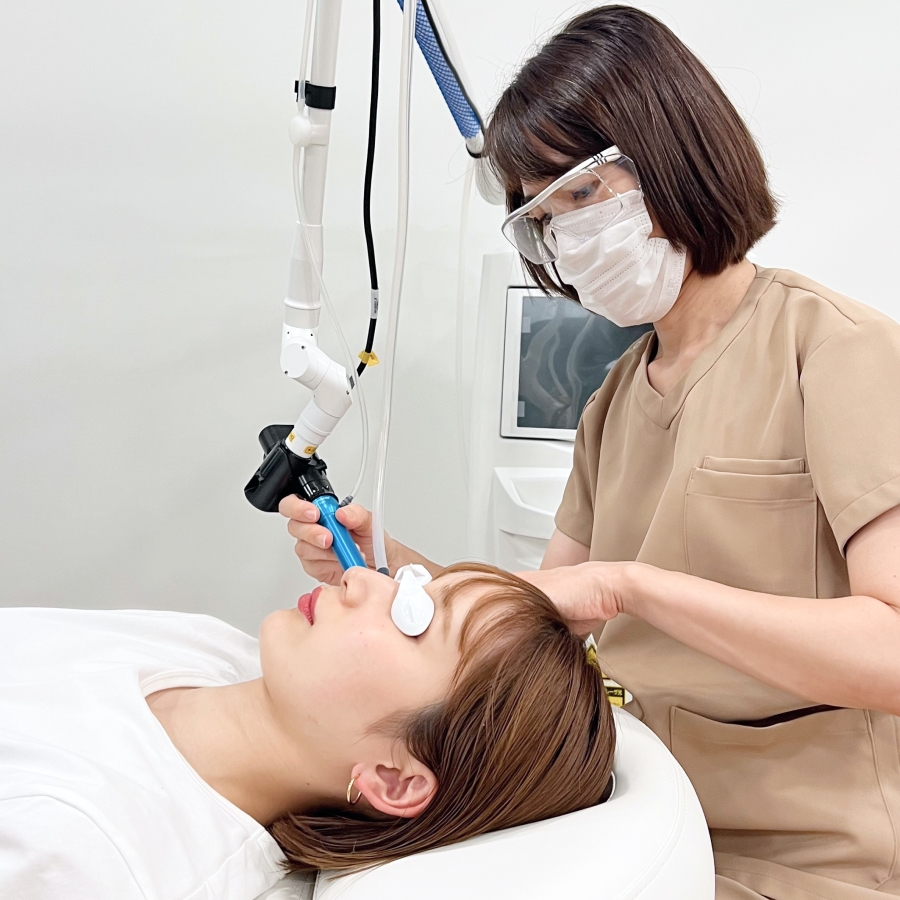
At Yayoi Clinic, a cosmetic dermatology clinic in Hiroshima, scars after moles are removed are taken into consideration,We mainly use CO2 (carbon dioxide) laser treatment, which does not require scalpels.The CO2 (carbon dioxide) laser is a treatment method to remove moles by utilizing a mechanism called "transpiration," which converts moisture in the skin into heat energy. The thermal coagulation that occurs at the same time causes little bleeding from surrounding blood vessels, and the pinpoint irradiation causes almost no damage to areas other than the treatment site.
■Yayoi Clinic's Mole Removal Process
At Yayoi Clinic in Hiroshima City, mole removal proceeds as follows
- Consultation with a doctor to check moles and skin conditions
- Laser irradiation to the treatment area
- After mole removal treatment, ointment is applied and protected with tape.
The time required for mole removal treatment depends on the area of irradiation, though,5 to 30 minutes approx.It is. For those who are sensitive to pain, anesthesia can be used to alleviate pain during irradiation.
■Downtime for mole removal at Yayoi Clinic
Makeup, face washing, and bathing can be done on the same day the mole is removed, avoiding the treated area. However, the laser-exposed area must be protected with ointment and tape for about two weeks after treatment. In addition, you will need to protect the area from ultraviolet rays by using a thorough sunscreen for about three months. Once the wound has healed, you should spend time wearing sunscreen with SPF 30 or higher.
■ Conclusion.
Many people want to remove a mole, but it is important to note that it may not be a mole but another disease, such as a malignant tumor. Therefore, if you have a mole that concerns you, be sure to consult a dermatologist or other specialized medical institution. At Yayoi Clinic in Hiroshima City, our experienced doctors offer appropriate treatment methods for mole removal treatment, aiming for beautiful results that can only be achieved by cosmetic dermatology. If you are considering mole treatment in Hiroshima, please feel free to contact Yayoi Clinic for consultation.
Aesthetic Dermatology, Aesthetic Medicine, Aesthetic Surgery, Art Make-up Yayoi Clinic (YAYOI CLINIC) in Hiroshima introduces treatments for different problems of the skin, body, and face.
In order to offer a better option for everyone, we will assess each person's skin condition and formulate a treatment plan that meets their needs in terms of treatment duration, budget, and acceptable downtime.
If you have any concerns, please come for a counseling session first.
■Related Articles Recommended for You
Description of Treatment] CO2 (carbon dioxide) laser
Approximate number of times of treatment】1 time~
*There are individual differences depending on the area to be treated.
Cost】 ¥4,500~¥98,000 *Additional treatment fee may be charged.
Side effects/risks] Blisters, erosions, redness, post-inflammatory hyperpigmentation, recurrence of moles, internal bleeding, etc.
[Notes on unapproved devices
This procedure may involve the use of unapproved medical devices that have not been approved by the Japanese Ministry of Health, Labour and Welfare.
The medical devices used for the procedure are subject to personal importation procedures under the judgment of a physician. For details, please refer to the Ministry of Health, Labor and Welfare's "Information on Medicines and Other Products of Caution for Personal Importation".
https://www.yakubutsu.mhlw.go.jp/individualimport/purchase/index.html
Except for products that have been approved by the pharmaceutical affairs bodies, there may be no other domestically approved medical devices with the same performance.
Significant risks and side effects may not be evident.
In the unlikely event of a serious side effect, the drug may not be covered by the government's remedy system (Pharmaceutical Adverse Reaction Damage Relief System).


