
Kiko Kono, M.D.
Profile
Graduated from Kawasaki Medical School. Worked as a dermatologist for about 20 years at core hospitals. After many years of experience and achievements, he became a cosmetic dermatologist. His practice style is to examine the skin thoroughly and pursue what is happening where on the skin and approach the problem. Her specialties include customized treatment, laser treatment, Botox, and skin growth injections. In her private life, she is a mother of two children.
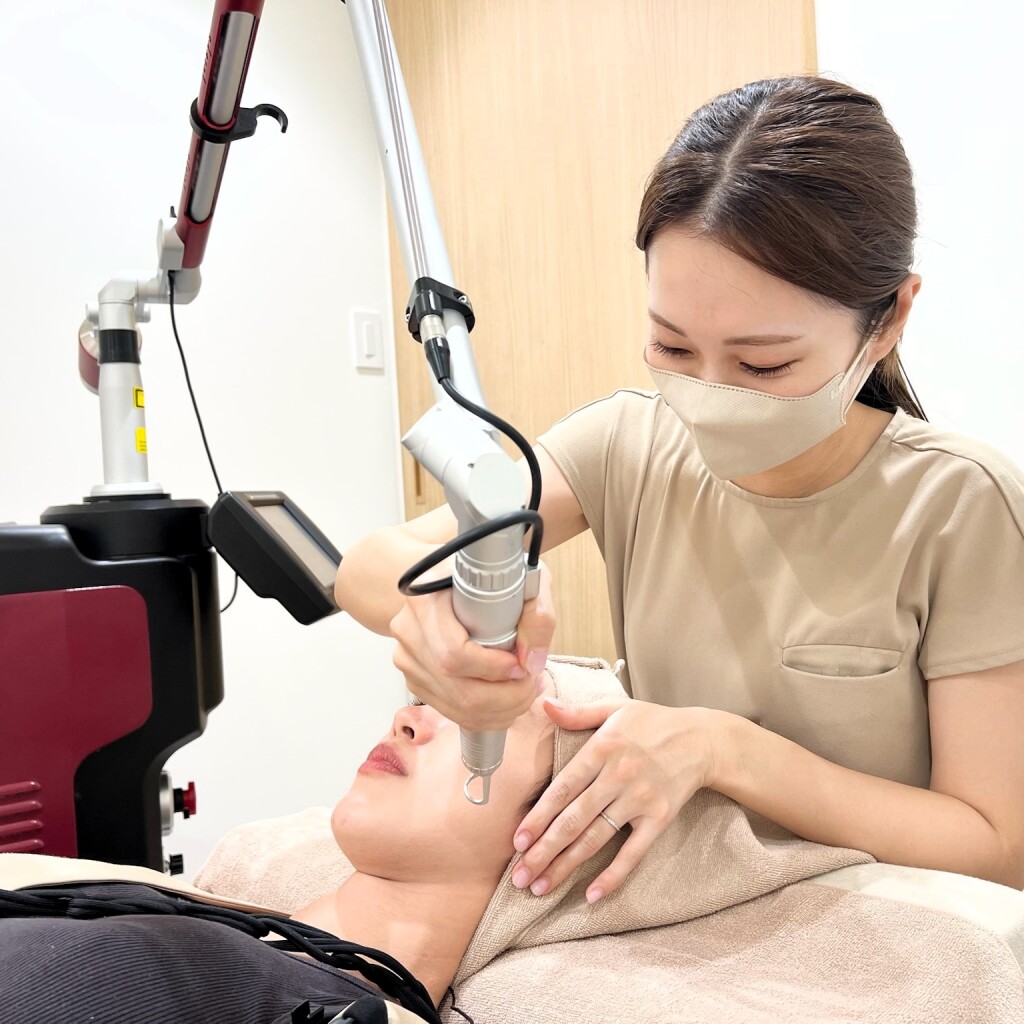
This is an explanation of why post-stain tape is necessary. If you are worried about whether the tape is noticeable ...... or think it is a hassle to reapply it every day, this is a must-see. In this article, we will introduce not only the reasons for applying tape after spot removal, but also how to properly manage the tape together. Self-care tips after spot removal laser are also explained, so if you are concerned about post-treatment care, please refer to this article.
Why tape after stain removal?
It is common practice to tape the affected area after a spot removal laser treatment. So what happens if you do not tape the area? First, let's check out the reasons for applying tape after laser spot removal.
Accelerate recovery of affected areas
Applying tape after blemish removal is believed to speed up the recovery of the affected area. After spot removal laser irradiation, the skin is in a mildly burned state. Weakened skin in the affected area tends to dry out easily and is very delicate. Therefore, tape is applied after treatment,Keep the treatment area moist.and heal in a shorter time than if the dry scabs were left in place.
Protects the affected area from UV rays and friction
As mentioned above, the skin after spot removal laser irradiation is very sensitive due to a reduced barrier function. Therefore, the skin is vulnerable to minor irritations, such as slight friction, which normally would not bother the skin.
In particular, ultraviolet light is a no-no after laser stain removal, as UV exposure of the affected area during downtime can lead to hyperpigmentation after stain removal. Therefore, it is important to protect the area with tape that can protect it from friction and UV rays after the blemish removal treatment.
Easy to manage the affected area
The skin barrier function has been reduced, and the face cannot be used as usual after spot removal, not only for makeup, but even for washing the face. If you wash your face without applying the tape, there is a possibility that the affected area will be stained or damaged. Therefore, by applying the tape to the affected area, it is possible to apply makeup and wash the face over the tape,Less likely to affect the skinThe first is the
Different types of lasers and different areas of the body require different types of tape after blemish removal.
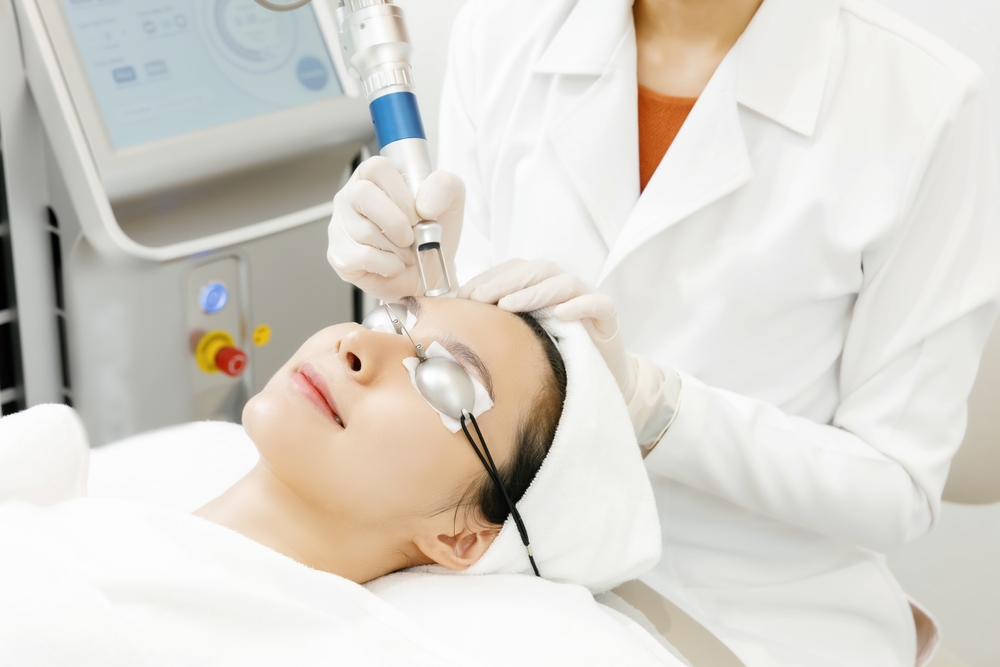
Basically, in most cases, tape is applied after blemish removal, but depending on the type of laser and the area or areas of blemish removal, tape may not be applied. Let's check the characteristics and downtime of each type of laser used for blemish treatment.
Q-switched ruby laser
Q-switched Ruby laser is,Treatment methods developed for the removal of spots and birthmarksThe damage caused by the treatment is relatively large, because even a single treatment is powerful enough to improve the spots. Basically, tape is often applied after the treatment, but in some cases, depending on the situation and wishes of the treated person, tape may not be applied. However, in such cases, Vaseline or ointment must be applied instead of tape to protect the affected area.
Q-switched YAG laser
The Q-switched YAG laser is used by many cosmetic dermatologists as a device for treating blemishes. By combining lasers of different wavelengths, it irradiates not only the shallow layers of the skin, but also the deeper layers,Extensive approachIt is possible. However, because the laser is irradiated at a powerful output, damage to the skin tends to be significant. Therefore, tape is required to protect the affected area after treatment.
laser toning
Laser toning is a type of Q-switched YAG laser. By irradiating areas of concern, such as dull skin and blemishes caused by sunburn,Expected to reduce uneven skin tone and improve skin toneIt is possible to use a laser beam to remove the skin. One of the features of this treatment is that it is less stressful on the skin because it can be output at a lower power than general laser treatment. Redness and itching may occur during downtime, but can be handled with pain relief packs or other means without taping.
picolaser
The picolaser can emit light in picoseconds, which is one trillionth of a second, and acts on fine melanin pigments that are difficult to approach with pinpoint accuracy. Compared to conventional laser devices, the thermalLow damageOne of the features of this treatment is that it is very easy to perform. Downtime is also minimal, so make-up can be applied without tape after treatment.
Proper use of tape applied after stain removal
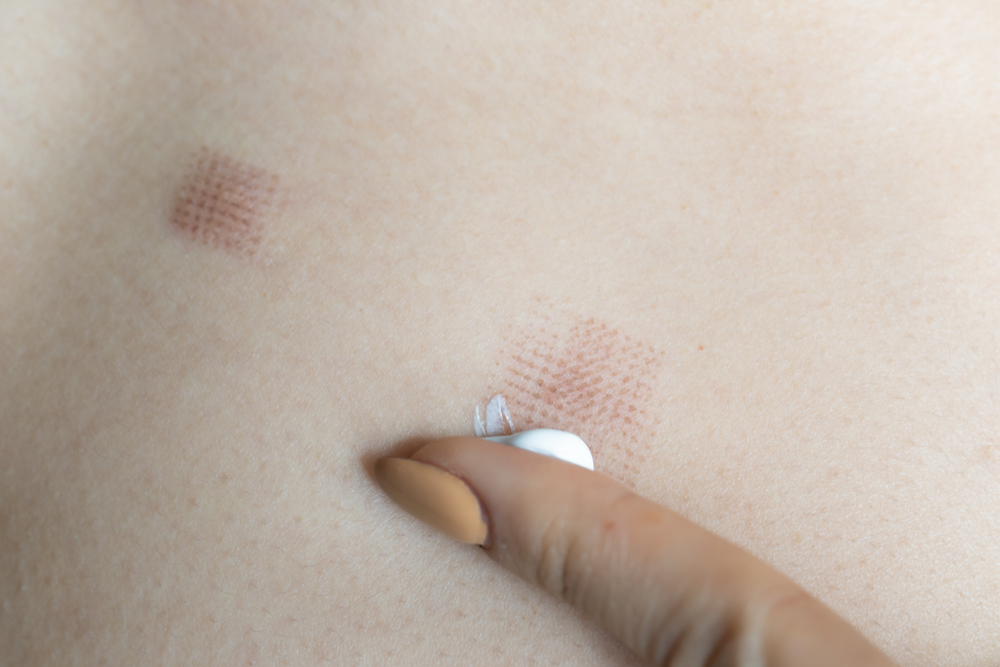
The frequency of replacement and use of post-spotting tape during downtime varies depending on the type. Types such as surgical tape and bandage must be changed daily, and ointment application is essential.
On the other hand, if the tape is specially designed for spot treatment, it does not need to be reapplied as often. The timing for removing the tape depends on the clinic's policy and the area treated, but a minimum of two weeks is recommended for the face.
However, the type of tape used and how it is administered after treatment varies depending on the clinic and treatment method. Be sure to check the aftercare instructions at the clinic where you were treated.
Self-care is key during downtime for laser spot removal.
In addition to keeping the tape on, self-care during downtime is the key to enhancing the effectiveness of the blemish removal laser. Finally, let's review how to spend downtime after spot removal.
Use medications and tapes as directed by the clinic.
To protect sensitive skin after treatment, medications and tapes must be used properly to protect the affected area. As mentioned above, aftercare methods vary depending on the device used, the treatment, and the clinic's policies. Follow the clinic's instructions and use the tape or medication correctly.
Avoid touching the treatment area.
It is important to avoid irritating the skin as much as possible after the treatment, which is delicate. Try to avoid touching the treated area as much as possible. If tape is applied after treatment, makeup and face washing can be done, but it is recommended to choose items that contain skin-friendly ingredients.
Take precautions against ultraviolet rays.
Ultraviolet rays are the enemy of post-treatment skin. Exposure to ultraviolet rays during downtime can cause hyperpigmentation even after the removal of spots. Therefore, take thorough precautions against UV rays, even in winter. If you are concerned that cream-type sunscreens may irritate the affected area, we recommend using a hat, face cover, arm cover, or parasol to physically block UV rays.
Avoid saunas and other places that make you sweat a lot.
After stain removal, it is safe to avoid activities that cause a lot of sweating. Sweat can cause irritation to the skin, such as stinging in the affected area. Also, the redness will not recede due to increased blood circulation,Possibility of prolonged downtimeThere are also Therefore, after treatment, avoid long baths and saunas, and limit physical activity to light exercise.
Don't force the scab off.
Forcibly peeling off the scab after blemish removal treatment is strictly prohibited. Forcibly removing a scab can cause the affected area to become inflamed, resulting in hyperpigmentation and scarring. Although you may be concerned about the healing scab, leave it as it is.
Conclusion
Tape is commonly applied to protect the delicate treatment area after blemish removal. Not applying tape and neglecting proper care can result in prolonged downtime and hyperpigmentation. However, since appropriate post-treatment care varies depending on the clinic's policies and treatment, follow the instructions of the clinic that treated you for aftercare.
Aesthetic Dermatology, Cosmetic Medicine, Cosmetic Surgery, Art Makeup in Hiroshima YAYOI CLINIC offers treatments for different skin, body, and facial concerns.
In order to offer a better option for everyone, we will assess each person's skin condition and formulate a treatment plan that meets their needs in terms of treatment duration, budget, and acceptable downtime.
If you have any concerns, please come for a counseling session first.
Description of treatment] Q-switched ruby laser
Q-switched ruby laser
Duration and number of treatments] Usually one treatment.
Cost】Spot removal 1 shot ¥1,500, procedure fee ¥10,000, unlimited spot removal ¥98,000
Risk and side effects] Redness, pain, petechial hemorrhage, hyperpigmentation
Equipment used.
Q-switched ruby laser treatment includes procedures using domestically unapproved drugs or medical devices.
Drugs and medical devices used for treatment were imported from Jeisy Medical Inc. under the judgment of our doctors.
Please refer to the following for information on medicines and other items of note for personal importation.
https://www.yakubutsu.mhlw.go.jp/individualimport/purchase/index.html
Machinery and equipment (31) Medical cauterizer Highly controlled medical device Ruby laser (36189000)
Specified maintenance controlled medical device Installation controlled medical device The Ruby Z1 Nexus
There are no other domestically approved drugs with the same ingredients or performance.
Medical device approval number: 30200BZX00022000
There is a possibility that serious risks, side effects, etc. have not been identified.
In the unlikely event of serious side effects, the drug is not covered by the government's Adverse Drug Reactions Relief Program.
Description of treatment] Q-switched Nd:YAG laser (laser toning)
Our equipment] TriBeam Premium
Treatment period and frequency] Once a week, about 5 to 6 times in total
Cost] 1 time ¥21,780
Risks and side effects] Redness, post-inflammatory hyperpigmentation, scar formation, depigmentation, etc.
Equipment used.
TriBeam Premium treatments include procedures using domestically unapproved drugs or medical devices.
Drugs and medical devices used for treatment were imported from Jeisy Medical Inc. under the judgment of our doctors.
Please refer to the following for information on medicines and other items of note for personal importation.
https://www.yakubutsu.mhlw.go.jp/individualimport/purchase/index.html
There are no other domestically approved drugs with the same ingredients or performance.
In the unlikely event of serious side effects, the drug is not covered by the government's Adverse Drug Reactions Relief Program.
Description of treatment] Pico Laser
Duration and number of treatments
Picotoning: every 2 weeks to 1 month, about 5 to 10 times in total
Pico-Fractional: Every other month, 3 to 10 times in total
Pico spot: 1 to 3 times
Approximate cost
Picotoning: 5,000 to 20,000 yen per session
PicoFractional: 1 time ¥15,000- ¥80,000
Pico spot: ¥5,000 to ¥30,000 per visit
Risks and side effects] Redness, swelling, hyperpigmentation, etc.
*This treatment is not available at our clinic.


