
Kiko Kono, M.D.
Profile
Graduated from Kawasaki Medical School. Worked as a dermatologist for about 20 years at core hospitals. After many years of experience and achievements, he became a cosmetic dermatologist. His practice style is to examine the skin thoroughly and pursue what is happening where on the skin and approach the problem. Her specialties include customized treatment, laser treatment, Botox, and skin growth injections. In her private life, she is a mother of two children.
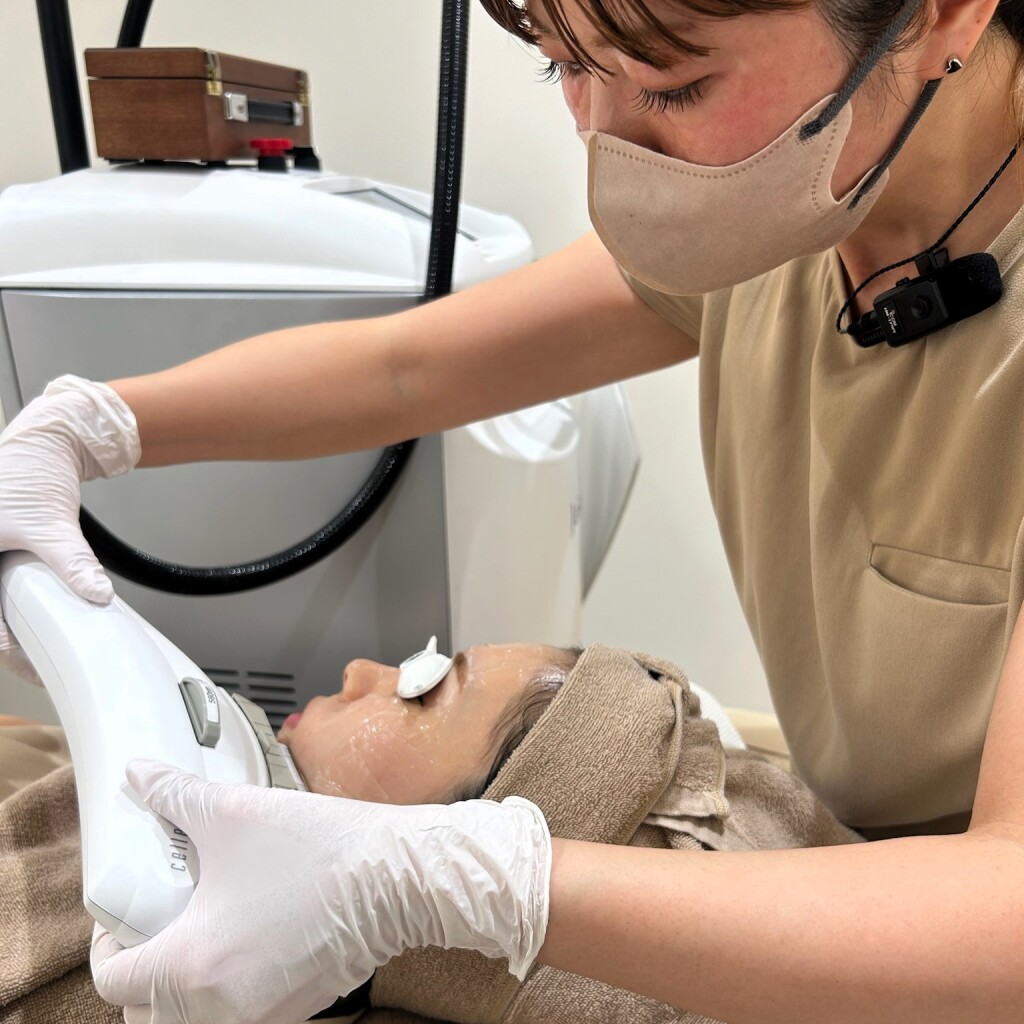
Some people may be concerned that scabs do not form after undergoing laser blemish removal. Is there a reason why a scab does not form? In this article, we will explain the process after laser spot removal and the reasons why scabs do not form. We will also answer some questions about scabs, so please refer to this article if you are concerned about the process after laser stain removal.
What is a spot removal laser?
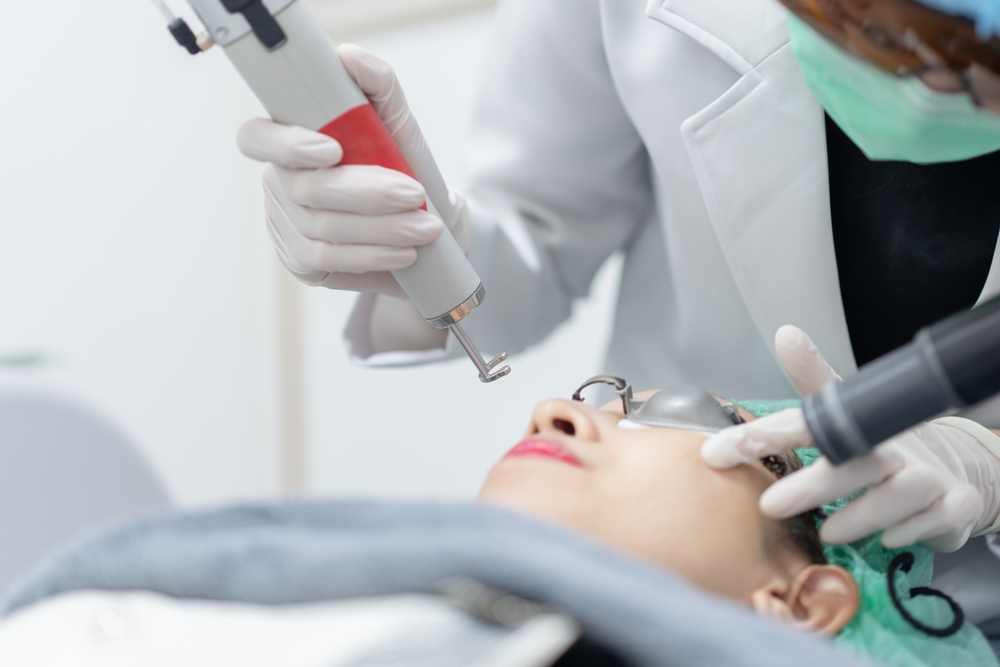
*Image is for reference only.
A spot removal laser reacts to melanin pigments to improve melasma and spots. First, we will introduce the types of spot removal lasers and the process after treatment.
Types of Blemish Removal Lasers
There are several types of spot removal lasers, depending on the characteristics of the treatment and the expected effects. The picolaser, which irradiates in picoseconds (trillionths of a second), can target and destroy only melanin pigments, so it requires fewer irradiations. Laser toning uses a low power output to gradually fade spots, resulting in little or no downtime, but it requires multiple sessions. In addition, Q-switched ruby lasers and fractional lasers can also be used.
In YAYOI CLINIC,Cerec V, TriBeam Premium (Q-switched Nd:YAG laser), Q-switched ruby laser, etc.There are two types of machine treatments for spots. The choice depends on the type of blemish you wish to treat and the desired approach.
Progress of laser spot removal
The condition of the skin after a blemish removal laser treatment depends on the type of device used. Let's take a look at the progress of a typical spot removal laser.
[Skin condition after laser blemish removal.
- Scabbing lasts about 1 week.
- After treatment, use a protective seal to protect the affected area
- The scab will naturally peel off and new skin will form in about 1 week to 10 days after treatment.
- Post-inflammatory hyperpigmentation may be seen in the area where the spots were located from about 2 weeks to 1 month after the treatment.
- If post-inflammatory hyperpigmentation is observed, it will settle down in as little as 3 months or as long as 6 months to 1 year.
Most cases of post-inflammatory hyperpigmentation will disappear with time, but in some cases, aftercare may be provided through the use of topical medications.
What causes no scabbing after laser spot removal?
In general, Q-switched ruby lasers, pico lasers, limelight, and Q-switched YAG lasers are treatments that often form scabs after treatment. If a scab does not form over the treated area despite the use of a blemish removal laser that is supposed to scab over, let's look at what causes this.
It's not like a scab that forms after an injury.
When you hear the word "scab," you may imagine a thick, dry shape like those that form after an injury. However, scabs after laser blemish removal look somewhat different from normal scabs, such as fine dots, a thin brown film, or a darker color. This difference from the imagined scab may cause the patient to mistakenly believe that no scab was formed.
When the irradiation output is too weak
Even if a treatment that causes scabbing has been performed, scabbing may not occur if the spot-removing laser is performed with a device that has a low irradiation power. In this case, the power of the laser on the blemish is weak.Melanin pigment is not destroyed and spots are not improved。
When the irradiation output is too strong
Excessive power may also cause scabs to fail to form. In particular, when irradiating dark spots or freckles, the laser is likely to overreact, resulting in a failure to scab over the spots. This is due to the fact that the blemish tissue disperses and disappears as soon as the laser is applied. The blemish tissue is destroyed, though, so the blemish itself does not remain,May cause significant skin damage and hyperpigmentation. Some equipment may be too powerful to treat at the lowest output, so choose a clinic that uses equipment that can handle a wide range of outputs.
If the pigment is only in the deep layer
Even if the stain you wish to treat is in a deeper layer, it may not scab over after the stain removal laser. Blemishes that do not scab easily include nevus ota, ectopic mongolian spots, nevus ampullus, ADM (acquired dermal melanocytosis), and tattoos. If laser treatment is performed on these spots, there is no need to worry because they do not scab over. If you are unsure of the type of blemish, check with your doctor.
What to do if a spot does not scab over after laser treatment for blemish removal
Q-switched ruby lasers and pico lasers are treatments that tend to form scabs when irradiated at the correct power. However, even in the unlikely event that a scab does not form, it is usually not a failure. This is because spots will gradually improve over several months to a year after irradiation,We'll see how it goes for a while.。
However, some doctors irradiate at a lower power considering the pain and pigmentation after the procedure. In this case, it is necessary to ask the doctor to change the output because it may not form a scab and the expected result may not be obtained. Please consult with the clinic first.
Frequently Asked Questions about Laser Blemish Removal

Some of you may have seen images of the progress of laser spot removal on blogs and other media and may be concerned that it is not the same as mine.
Here are answers to some frequently asked questions about spot removal laser treatment.
How many days does it take for the scab to come off after spot removal laser treatment?
Scabs are usually removed after laser spot removal.After approximately 1 week to 10 daysThe scab will fade and come off as the days pass. If the scab does not peel off after 10 days, do not try to force it off.
What if the scabs come off too quickly after spot removal laser treatment?
If the scab comes off too quickly or you are concerned about peeling it off, you can first use the spot removal laser'sConsult the clinic where the procedure was performed.Please do so. The skin with the scab removed is weak and care must be taken not to cause friction or sunburn. Pigmentation may appear more intense, so aftercare may take longer.
What remains black without scabbing after spot removal laser treatment?
In some cases, the skin does not scab over and remains dark. There are many possible causes of darkening of the skin after laser spot removal, but one isStrong reaction and prolonged inflammation.The second is the case, despite the fact that it is actually a scab,I'm assuming it's not a scab because of the way it looks.Case. Finally,Temporary darkening and darkening of spotsIn this case, the skin will most likely fade over time. In most cases, the skin will fade over time, so it is advisable to follow the aftercare instructions given by the clinic, such as ointments and tapes, and see how the skin responds.
Is it ok to stay red after spot removal laser?
You may also be concerned if you remain red or swollen after a spot removal laser. if the redness persists for more than a month,postinflammatory erythemaIt is believed that this is the case.
Also, the hyperpigmentation after the spot removal laser should gradually fade after about three to six months, so watch for a while. In the meantime, please follow the aftercare instructions given to you.
Is it safe to wear makeup after spot removal laser?
Immediately after the spot removal laser, the scab may not have fully formed. If the scab has not yet formed, it may cause significant stress to the affected area,Makeup and face wash should be avoided.It is recommended to wash your face with lukewarm water and rinse it gently. When washing the face, it is recommended to just rinse it gently with lukewarm water. Do not apply ointments or tapes to avoid straining the skin. Also, follow the rules of aftercare, such as taking measures to protect against ultraviolet rays.
Conclusion
Although most treatments after laser blemish removal will result in scabbing, there are some cases where scabbing does not occur, depending on the type of blemish and the nature of the treatment. This article will help you understand the process of treatment and the reasons why scabs do not form, so that you can go into your treatment with peace of mind. Even if the scab does not form after the treatment, do not worry too much, but monitor the condition carefully and consult with the clinic where the treatment was performed if necessary.
Aesthetic Dermatology, Cosmetic Medicine, Cosmetic Surgery, Art Makeup in Hiroshima YAYOI CLINIC offers treatments for different skin, body, and facial concerns.
In order to offer a better option for everyone, we will assess each person's skin condition and formulate a treatment plan that meets their needs in terms of treatment duration, budget, and acceptable downtime.
If you have any concerns, please come for a counseling session first.
Description of treatment] IPL (Photofacial)
CEREC V
Treatment period and frequency: Every 2 to 4 weeks for a total of 3 to 10 times.
Cost] 1 time for the whole face ¥21,780
Risks and side effects] Pain, skin damage, hyperpigmentation, scarring, excessive edema, erythema, purpura, etc.
Equipment used.
CEREC V treatment includes procedures using unapproved drugs or medical devices in Japan.
Drugs and medical devices used for treatment were imported from Jeisy Medical Inc. under the judgment of our doctors.
Please refer to the following for information on medicines and other items of note for personal importation.
https://www.yakubutsu.mhlw.go.jp/individualimport/purchase/index.html
There are no other domestically approved drugs with the same ingredients or performance.
Information on safety, etc. in other countries. The following certifications have been obtained
CE (2018.10)MFDS (2017.8)
There is a possibility that serious risks, side effects, etc. have not been identified.
In the unlikely event of serious side effects, the drug is not covered by the government's Adverse Drug Reactions Relief Program.
Description of treatment] Q-switched Nd:YAG laser (laser toning)
Our equipment] TriBeam Premium
Treatment period and frequency] Once a week, about 5 to 6 times in total
Cost] 1 time ¥21,780
Risks and side effects] Redness, post-inflammatory hyperpigmentation, scar formation, depigmentation, etc.
Equipment used.
TriBeam Premium treatments include procedures using domestically unapproved drugs or medical devices.
Drugs and medical devices used for treatment were imported from Jeisy Medical Inc. under the judgment of our doctors.
Please refer to the following for information on medicines and other items of note for personal importation.
https://www.yakubutsu.mhlw.go.jp/individualimport/purchase/index.html
There are no other domestically approved drugs with the same ingredients or performance.
In the unlikely event of serious side effects, the drug is not covered by the government's Adverse Drug Reactions Relief Program.
Description of treatment] Q-switched ruby laser
Q-switched ruby laser
Duration and number of treatments] Usually one treatment.
Cost】Spot removal 1 shot ¥1,500, procedure fee ¥10,000, unlimited spot removal ¥98,000
Risk and side effects] Redness, pain, petechial hemorrhage, hyperpigmentation
Equipment used.
Q-switched ruby laser treatment includes procedures using domestically unapproved drugs or medical devices.
Drugs and medical devices used for treatment were imported from Jeisy Medical Inc. under the judgment of our doctors.
Please refer to the following for information on medicines and other items of note for personal importation.
https://www.yakubutsu.mhlw.go.jp/individualimport/purchase/index.html
Machinery and equipment (31) Medical cauterizer Highly controlled medical device Ruby laser (36189000)
Specified maintenance controlled medical device Installation controlled medical device The Ruby Z1 Nexus
There are no other domestically approved drugs with the same ingredients or performance.
Medical device approval number: 30200BZX00022000
There is a possibility that serious risks, side effects, etc. have not been identified.
In the unlikely event of serious side effects, the drug is not covered by the government's Adverse Drug Reactions Relief Program.
Description of treatment] Pico Laser
Duration and number of treatments
Picotoning: every 2 weeks to 1 month, about 5 to 10 times in total
Pico-Fractional: Every other month, 3 to 10 times in total
Pico spot: 1 to 3 times
Approximate cost
Picotoning: 5,000 to 20,000 yen per session
PicoFractional: 1 time ¥15,000- ¥80,000
Pico spot: ¥5,000 to ¥30,000 per visit
Risks and side effects] Redness, swelling, hyperpigmentation, etc.
*This treatment is not available at our clinic.


